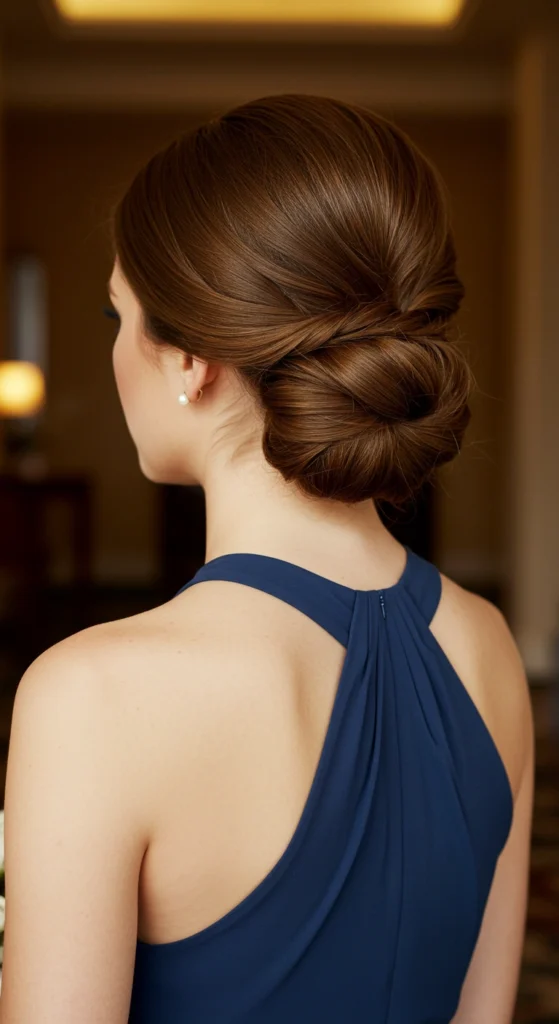

Thick hair can be a genuine asset, but only when the cut is doing its job — removing excess weight, encouraging movement, and keeping the shape from turning into a solid triangle by midday.
The right layering and length choice make all the difference between a haircut that fights you every morning and one you can air-dry and forget about. Below are 22 haircut ideas that approach this differently — some rely on internal layering, others on shape or texture — but each one is built to make thick hair genuinely easier to live with.
Long Layered Bob with Point-Cut Ends
A long bob loses its bulk fast when the ends are point-cut rather than blunt, breaking up the line just enough to avoid a heavy, solid edge. The layering stays mostly internal, so the outer silhouette still looks clean and intentional. Air drying brings out soft, natural texture, and a light cream is usually all it takes to finish the look. This shape holds up well between trims and never turns stiff or slab-like at the ends.
Shoulder-Grazing Shag with Curtain Fringe
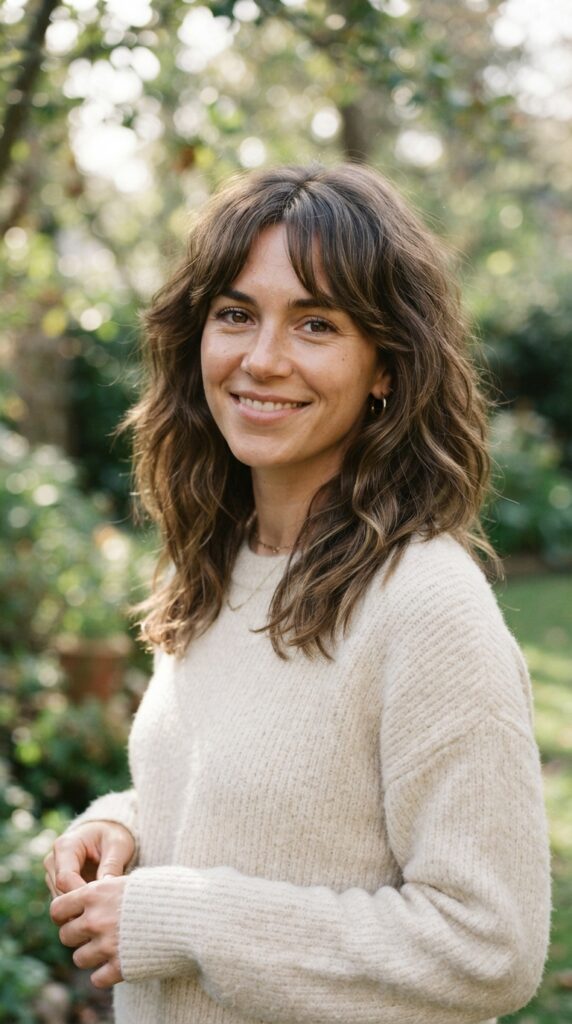
A shag cut at shoulder length paired with a soft curtain fringe gives thick hair somewhere to put all that volume without it piling up around the face. The layering throughout breaks density into smaller, more manageable sections. Styling is genuinely quick — a texture spray on damp hair and a scrunch is usually enough. The fringe blends into the layers so it grows out without an awkward stage.
Blunt Lob with Interior Layering
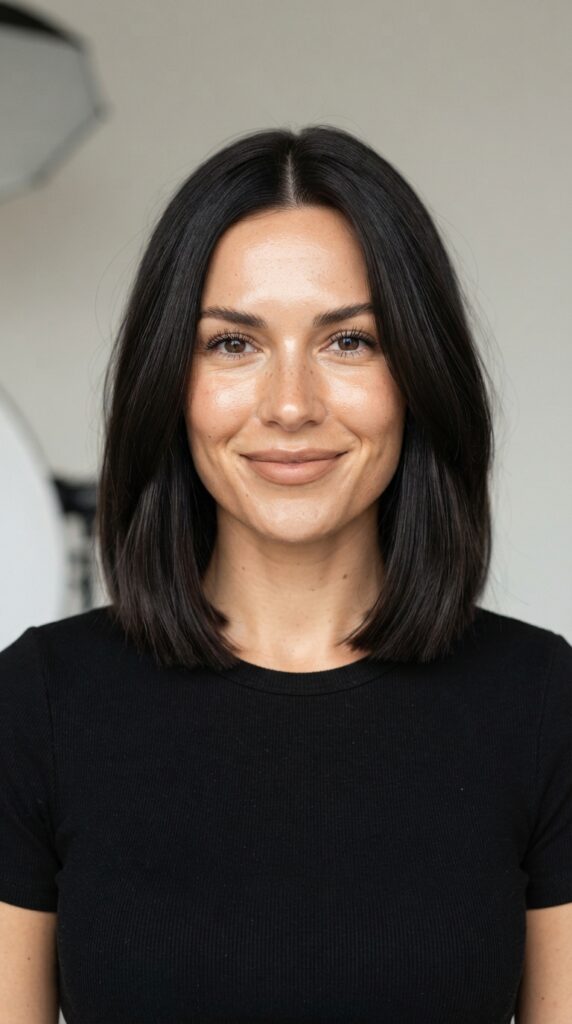
From the outside, this lob looks crisp and sharp, but hidden layers underneath do the real work of removing weight. The result is a shape that reads polished without the stiffness thick hair usually brings to a blunt cut. It air-dries smoothly and takes well to a quick round-brush finish if you want more shine. This is a strong option for anyone who likes clean lines but not the maintenance that usually comes with them.
Long Layers with a Deep Side Part

Moving the part off-center adds instant lift at the root, which does a lot of visual work in reducing how heavy thick hair can look. Long layers throughout the length keep things from clumping into one thick mass. Styling stays low-effort since the deep part builds shape almost automatically. It’s a reliable, everyday option for both straight and wavy textures.
Textured Pixie-Bob Hybrid

Somewhere between a pixie and a bob, this shorter cut relies on heavy texturizing to keep thick hair from looking bulky at a shorter length. The result is choppy, piece-y, and full of movement rather than dense and helmet-like. A small amount of matte paste worked through with fingers is genuinely the entire styling routine. It’s one of the lowest-maintenance options on this list for anyone ready to go shorter.
Graduated Bob with Soft Undercut Layers

A graduated bob with subtle undercutting at the nape removes weight exactly where thick hair tends to pile up the most. From the front, the shape still reads full and rounded, but the back stays lighter and easier to manage. This cut blow-dries quickly since so much bulk has already been removed underneath. It works especially well for anyone who wears their hair down most days.
Mid-Length Cut with Razor-Textured Ends

Razor-cutting the ends instead of using blunt scissors softens the line and removes visible weight without shortening the overall length. This mid-length shape stays full through the crown while the ends move more freely. Air drying looks intentional here, and a light texturizing spray enhances the effect. It’s a solid choice for thick, straight hair that tends to look blocky with a standard trim.
Long Layers with a Center Part

A center part paired with long, subtle layers creates a symmetrical, low-maintenance shape that suits nearly every face. The layering removes enough interior weight that the ends move instead of hanging stiffly. This cut air-dries well and only needs the occasional touch-up with a flat iron for smoother days. It’s an easy, dependable option for anyone who doesn’t want to think too hard about styling.
Collarbone Bob with Wispy Layers

Hitting right at the collarbone, this bob uses wispy, feathered layers throughout to keep thick hair from reading as one dense block. The wispiness is especially useful around the ends, where thick hair often looks the heaviest. Styling takes just a few minutes with a diffuser or an air-dry finish. It’s a versatile length — long enough to tuck behind the ears, short enough to feel fresh.
Shoulder-Length Cut with Face-Framing Layers
Face-framing layers cut into an otherwise simple shoulder-length shape lighten things up right where thick hair tends to bunch up near the jaw. The rest of the length stays fuller, keeping the cut from feeling over-thinned. A quick round-brush pass or a simple air-dry both work well here. This is an easy everyday cut that still photographs well for special occasions.
Long Shag with Feathered Crown

A long shag with extra feathering concentrated at the crown adds lift and movement exactly where thick hair often falls flat under its own weight. The layering continues loosely through the rest of the length, keeping things airy rather than heavy. Texture spray and a scrunch bring out the shape with almost no effort. This cut rewards second-day hair more than freshly washed hair.
Textured Bob with Undercut Nape

A textured bob with a subtle undercut at the nape removes bulk from the area that tends to feel the thickest and hardest to style. The visible layers on top stay soft and blended rather than choppy. This cut works well air-dried or with a light flat-iron pass for extra smoothness. It’s a good pick for anyone who wants a bob without the usual bulk thick hair adds to the shape.
r current shape but not the weight.
The common thread across every cut here is the same: thick hair looks and feels its best when weight is removed thoughtfully rather than all at once. Bring a few of these ideas to your next appointment and talk through which layering approach fits your length, texture, and how much time you actually want to spend styling each morning.