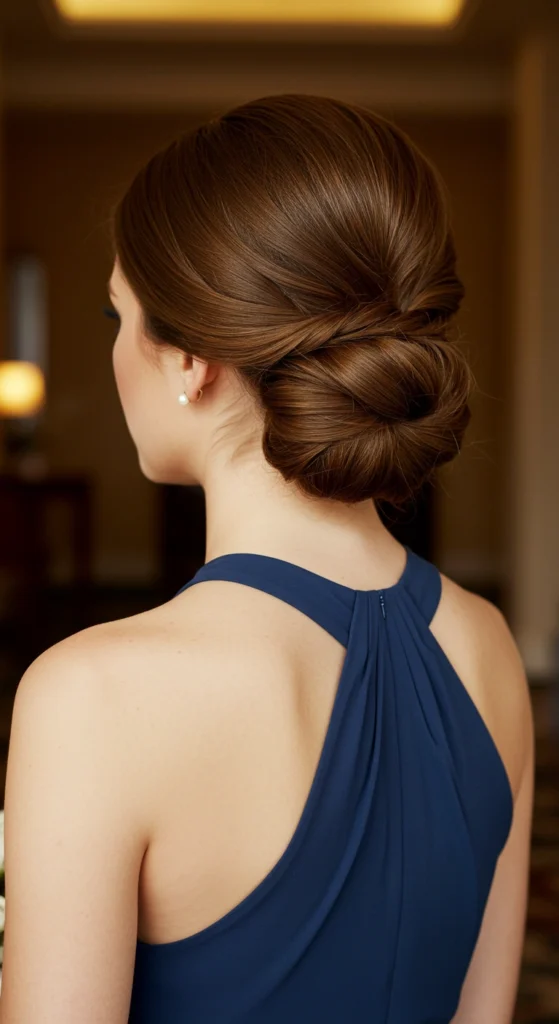
Introduction: The Fine Hair Struggle Is Real
If you have fine hair, you already know the drill. You wake up, catch a glimpse in the mirror, and before you’ve even had your coffee, you’re already fighting the same battle you lost yesterday — flat roots, zero body, and a style that gave up on you somewhere between your morning commute and lunch. You’ve tried the volumizing shampoos, the root-lifting sprays, the round brush blowout tutorials at 7 a.m. Some days it works. Most days, it doesn’t.
Here’s the uncomfortable truth that no product advertisement will ever tell you: you cannot volumize your way out of a haircut that is working against your hair type. No serum, no dry shampoo, no $40 mousse will fix a cut that’s simply too heavy for fine strands to carry. The problem isn’t your hair. The problem is the shape.
Fine hair doesn’t lack personality — it lacks the right architecture.
And that’s exactly where the short shag comes in.
The Short Shag: Why It’s the Ultimate Fine-Hair Fix
The short shag is not a trend. It’s a structural solution.
The genius of this cut lies in what it removes rather than what it adds. Traditional haircuts often leave fine hair with blunt, heavy ends that pull strands downward, suffocating any root lift before it even has a chance. The shag does the opposite. Through a series of strategic, choppy layers distributed throughout the interior of the cut, it physically removes dead weight from the hair. Less weight means less drag. Less drag means your roots can finally breathe, lift, and hold.
The result? Movement. Texture. The effortless, lived-in volume that fine-haired people have been chasing their entire lives.
The short shag also works with your hair’s natural behavior rather than against it. Those wispy pieces around the face? Intentional. The slightly undone finish? By design. This is a cut that looks better when it’s not perfectly in place — which, for anyone with fine hair, is genuinely liberating.
The Hairstyle Gallery: Finding Your Perfect Variation
One of the greatest strengths of the short shag is how adaptable it is. There is no single version of this cut — there are dozens, each one tailored to a different face shape, lifestyle, and aesthetic. Here are the six most compelling variations to consider.
1. The Shaggy Bob — The Perfect Entry Point
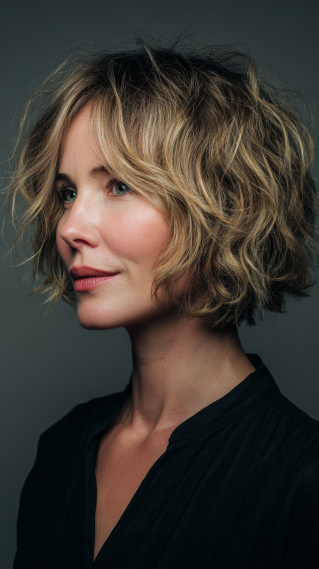
For anyone who loves the idea of a shag but isn’t quite ready to commit to something dramatically short, the shaggy bob is your ideal starting place. It marries the familiar, face-framing structure of a classic bob with the choppy interior layers of a true shag. The length typically sits somewhere between the chin and the collarbone, giving you enough hair to feel secure while the layering does the heavy lifting — literally.
What makes this variation particularly smart for fine hair is the contrast between the textured interior and the slightly more defined perimeter. You get the movement and volume of a shag without sacrificing the clean outline that makes a bob so universally flattering. Style it with a few scrunches of sea salt spray and let it air-dry for an effortlessly full finish, or use a diffuser for extra root lift. Either way, you will look like you spent far more time on your hair than you actually did.
Best for: Fine hair newcomers to the shag, those who want versatility between polished and undone looks.
2. The Shag with Curtain Bangs — Volume Where You Want It Most
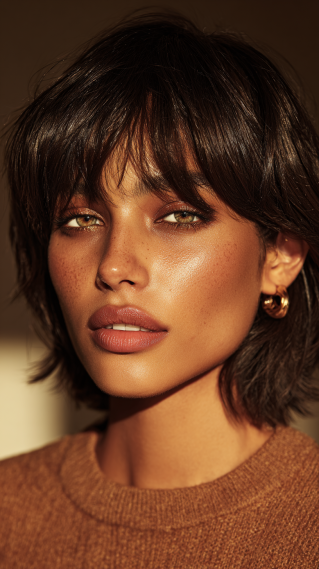
If your main complaint is that your hair looks flat specifically around your face and temples, curtain bangs paired with a shag cut are a targeted, almost surgical solution. Curtain bangs — those soft, center-parted sweeping pieces that fall on either side of the forehead — create an immediate illusion of fullness right at cheekbone level, which is precisely where the eye is naturally drawn.
Unlike blunt, straight-across bangs that can overwhelm fine features and require obsessive daily styling, curtain bangs are inherently low-maintenance. They grow out gracefully, they work with your natural part, and they require nothing more than a round brush and 60 seconds with a blow dryer to look intentional. When combined with the texture of a shag cut, they create a frame around the face that reads as voluminous and full from every angle.
Best for: Oval, heart, and square face shapes; anyone wanting to add emphasis to their cheekbones and eye area.
3. The Shaggy Pixie Cut — Maximum Volume, Minimum Length
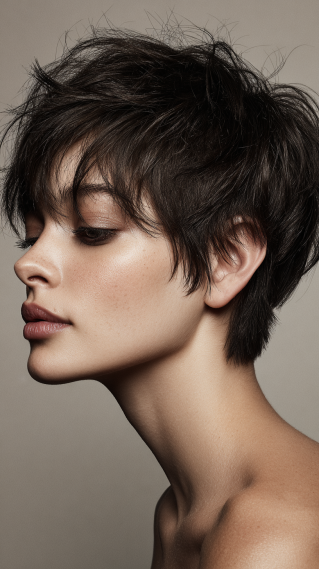
This is the cut for the truly committed. The shaggy pixie takes the core philosophy of the shag — remove weight, create texture, encourage lift — and applies it to the shortest possible canvas. And counterintuitively, that’s exactly why it works so well for fine hair.
The shorter your hair, the less it weighs. The less it weighs, the more your roots lift. With a shaggy pixie, virtually every strand is contributing to the overall shape of the style rather than being dragged down by length. The choppy, piece-y texture that defines this cut means that even the finest, most stubborn hair has no choice but to stand at attention. Add a small amount of texturizing paste, work it through with your fingers, and you have a style with more personality and volume than most people with thick hair can achieve on their best day.
This is bold. This is a statement. But for fine hair, it may also simply be the most practical decision you’ve ever made.
Best for: Those ready for a dramatic transformation; low-maintenance seekers; people who want to stop fighting their hair entirely.
4. The French Shag — Effortless, Wispy, Undone
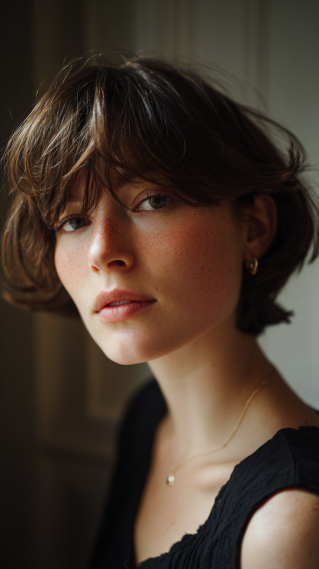
If the words “high-maintenance” make you immediately close your laptop and abandon your haircut research, the French shag was designed specifically for you. Inspired by the effortlessly undone aesthetic of Parisian style, this variation leans into soft, wispy layers and a delicate fringe rather than sharp, defined choppiness. Think Bardot, think Jane Birkin — that slightly imprecise, slightly imperfect finish that somehow always looks more chic than anything that required effort.
For fine hair, the French shag works because the wispy layering still removes weight and creates movement, but with a softer hand. It’s less rock ‘n’ roll, more Sunday-morning-in-a-café. The fringe — light and feathery rather than blunt — adds a romantic softness around the face without the commitment of a traditional bang. Style it by simply scrunching a small amount of mousse into damp hair and letting it dry naturally. The less you fuss with it, the better it looks.
Best for: Those who prefer romantic, soft aesthetics over edgy ones; anyone who wants a shag but finds other variations too dramatic.
5. The Modern Mullet / Short Wolf Cut — The Trend With Staying Power
Yes, the mullet is back. But before you immediately scroll past, it is worth understanding why this particular reincarnation has captured the imagination of both Gen Z and millennials so thoroughly — and why it happens to be exceptionally well-suited to fine hair.
The modern mullet, often called a wolf cut, is shorter at the front and sides with slightly more length retained at the back. It is heavily textured throughout, with aggressive layering that creates dramatic volume at the crown and movement through the ends. For fine hair, this structure is enormously flattering. The shorter front sections sit closer to the roots, where fine hair is naturally at its strongest and most lifted, while the longer back pieces add the visual impression of density without the weight penalty.
This cut photographs exceptionally well and styles quickly. A diffuser or even air-drying with a bit of mousse brings out the texture. If you are someone who wants their hair to make a statement, the wolf cut delivers.
Best for: Trend-conscious individuals; those who want a statement cut with genuine structural benefits for fine hair.
6. The Curly or Wavy Short Shag — Let Your Texture Work For You
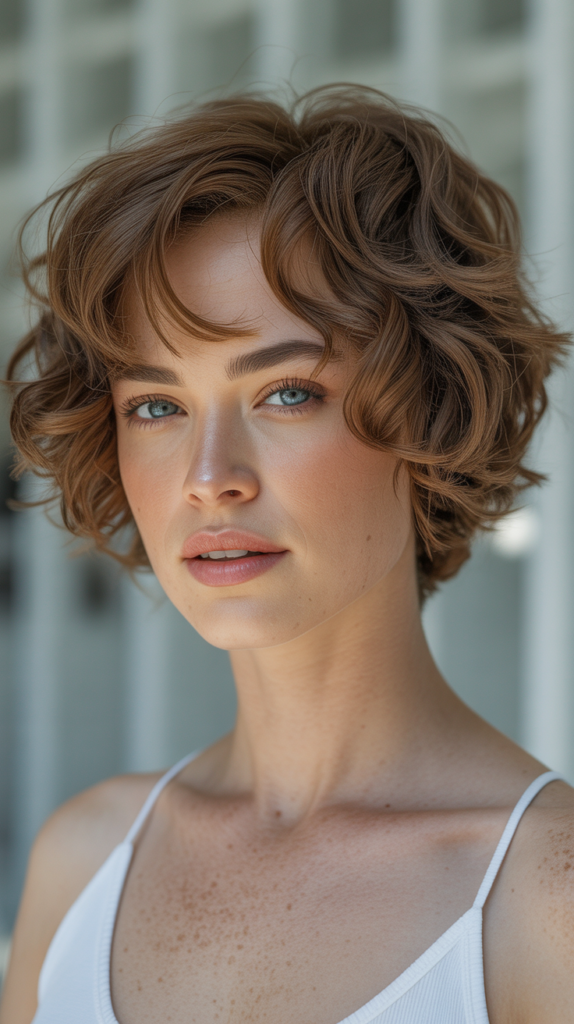
Fine hair and natural waves or curls are a complicated relationship. The length and weight of longer styles often pull curl patterns flat, leaving wavy hair looking limp and inconsistent rather than beautifully defined. The short shag resolves this with elegant simplicity: by removing length, it removes the weight that was suppressing your natural texture.
When wavy or lightly curly fine hair is cut into a shag, the shorter layers spring upward rather than falling downward. Each curl or wave is freed to do exactly what it naturally wants to do, which is coil, bounce, and create volume from the root. The resulting style looks effortlessly full and three-dimensional in a way that straight fine hair cannot quite replicate — and requires very little daily effort to maintain. Diffuse with a curl-enhancing cream and scrunch out the cast, and your hair will do the rest.
Best for: Fine hair with any natural wave or texture; those who want to work with their hair’s natural inclinations rather than against them.
Styling & Maintenance Guide: Everything You Need to Know
Getting the cut is only half the equation. Here is how to maintain the volume and texture of your short shag without weighing your fine hair down.
Style With a “Less Is More” Philosophy
The number one mistake people with fine hair make is over-applying product in an attempt to add more volume. This is deeply counterproductive. Fine hair has a low tolerance for product buildup. The moment you cross the line from “enough” to “too much,” your hair shifts from voluminous and textured to flat, greasy-looking, and separated in all the wrong ways.
The golden rule is to apply products to damp hair only, use a quantity roughly the size of a dime or smaller, and distribute it evenly rather than concentrating it in one area. When in doubt, use less than you think you need. You can always add more. You cannot easily remove product once it is in your hair without starting over entirely.
Finger-styling is your best friend with a shag cut. Work the product through with your fingertips, scrunch gently, and let the cut do the work it was designed to do. Resist the urge to over-brush or over-comb — both will flatten the texture you are trying to achieve.
The Right Products for Fine Hair
Use these:
- Lightweight volumizing mousse applied to damp roots before blow-drying — adds lift without residue.
- Sea salt spray for instant texture and a natural, piece-y finish on dry hair.
- Dry shampoo at the roots between washes — absorbs oil and restores lift simultaneously. Apply at night before bed for best results.
- Texturizing paste or putty used sparingly on dry hair to define individual pieces and add separation. A small amount worked between the fingertips and pressed lightly through the ends creates a deliberately undone finish.
Avoid these:
- Heavy oils and serums — even a small amount will cause fine strands to clump together and appear greasy within hours.
- Thick gels or waxes — these coat the hair shaft with weight and residue, the exact opposite of what fine hair needs.
- Conditioning masks applied to the roots — reserve any deep conditioning treatment strictly for the mid-lengths and ends.
Overcoming “Layer Fear”: The Honest Answer
If you have fine hair, there is a reasonable chance you have been told at some point not to get layers — that they will make your hair look thinner and more sparse. This advice is not entirely wrong, but it is missing crucial nuance.
The distinction that matters is where the layers are placed and how they are cut.
Aggressive layers that thin out the very perimeter — the outermost outline — of your hair will indeed make fine hair look sparse and wispy in an unflattering way. Those are the layers to avoid. What you want instead is layering concentrated in the interior of the cut, leaving the perimeter relatively blunt and solid. This creates the internal movement and volume you are looking for while maintaining a strong, full-looking outline when the hair falls naturally.
When you sit down with your stylist, use this exact language: “I want choppy interior layers for texture and volume, but I’d like the perimeter to stay relatively blunt and solid.” A skilled stylist will know exactly what you mean. This single instruction will protect you from the razor-thin ends that give layers a bad reputation among fine-haired clients.
Conclusion: Your Next Steps
You have done the research. You know the cut, you understand the variations, and you have the product knowledge to maintain it. There is only one thing left to do.
Save a photo before your appointment. This is not optional — it is the single most effective thing you can do to ensure you walk out of the salon with exactly what you envisioned. Stylists are not mind readers, and verbal descriptions of haircuts are notoriously imprecise. “Short,” “layered,” and “textured” mean something different to every person in the room. A photograph eliminates all ambiguity. Bring one image that captures the overall shape, and if possible, a second that shows the texture up close.
The best photo to bring? One from this article that matches your face shape and the aesthetic you’re drawn to. Screenshot it right now, before you close this page.
And finally — pick your favorite. Whether you are leaning toward the soft romance of the French shag, the bold confidence of the shaggy pixie, or the trend-forward energy of the wolf cut, the right answer is the one that made you stop scrolling and think that could be me. Trust that instinct. Save it to your inspiration board. Show it to your stylist.